Pa vs Air Watt What’s the Difference and Which Should You Check Before Buying a Vacuum Cleaner?
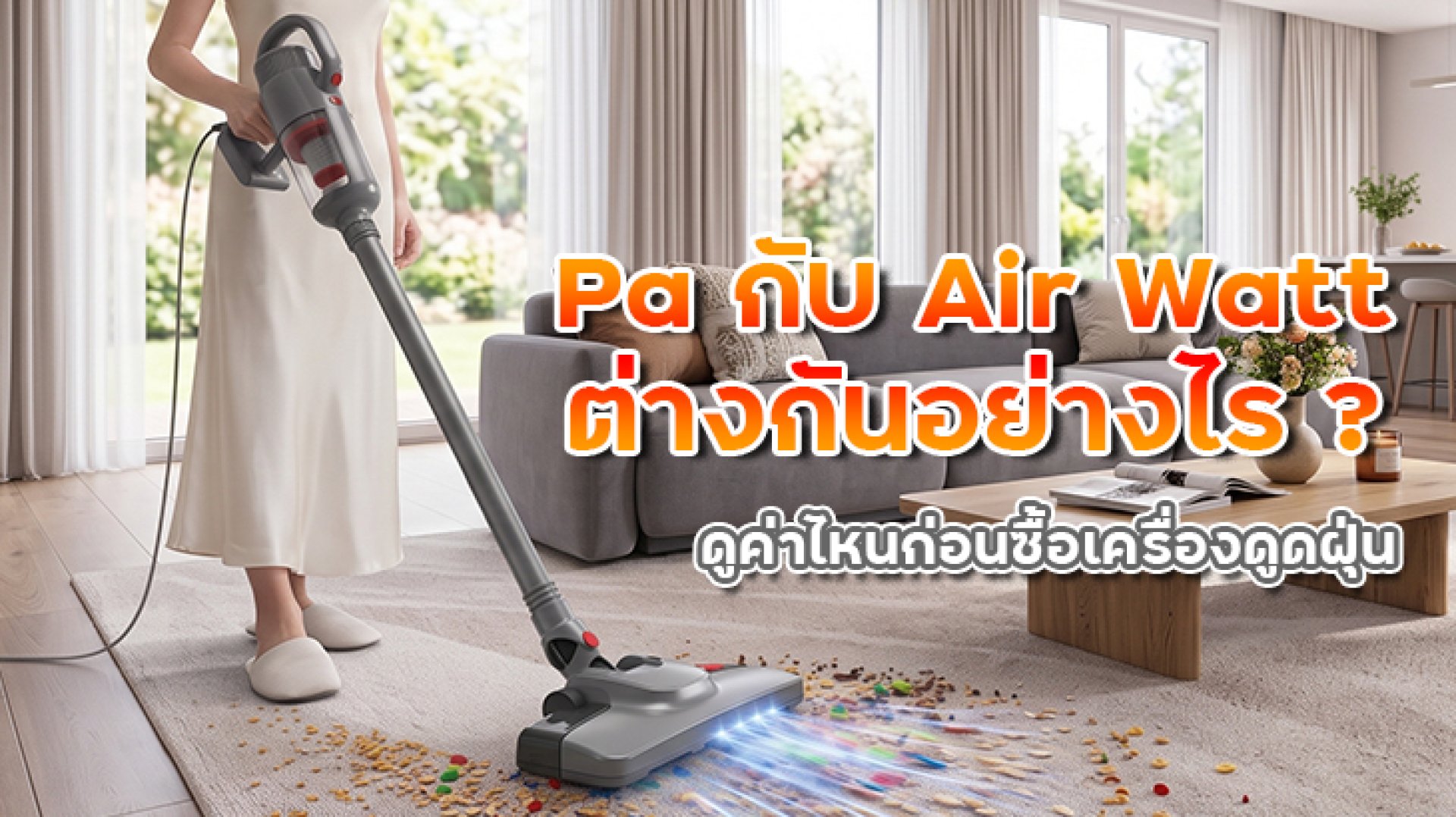
When shopping for a vacuum cleaner, you may see specifications such as 20,000 Pa, 30,000 Pa, or 200 Air Watts. At first glance, it may seem easy to assume that the higher number means stronger suction.
But there is an important catch: Pa and Air Watt do not measure exactly the same thing. You cannot simply compare 20,000 Pa with 200 Air Watts and conclude which vacuum cleaner is more powerful based on the numbers alone.
So what do these specifications actually mean? And when buying a vacuum cleaner, should you look at Pa or Air Watt first?
Let's break it down.
What Is Pa in a Vacuum Cleaner?
Pa stands for Pascal, the SI unit used to measure pressure. In vacuum cleaners, Pa is commonly used to describe the pressure difference or vacuum pressure generated by the suction system.
In simple terms, Pa helps indicate the vacuum cleaner's ability to create a pressure difference that pulls air and debris toward the machine.
You may see vacuum cleaner specifications such as:
- 10,000 Pa
- 15,000 Pa
- 20,000 Pa
- 30,000 Pa
- 40,000 Pa
When measured under comparable conditions, a higher Pa value indicates a greater pressure difference. However, a higher Pa rating does not automatically mean better real-world cleaning performance.
Airflow, floor-head design, brush design, sealing, and filtration also affect how effectively a vacuum cleaner actually picks up dust and debris.
What Is Air Watt?
Air Watt (AW) is a measurement associated with the suction power of a vacuum system, taking both pressure and airflow into account.
This is important because vacuuming is not simply about creating high suction pressure. The system also needs to move air efficiently so that dust and debris can travel through the cleaning head and into the vacuum.
In simplified terms:
Pa focuses on pressure, while Air Watt reflects suction power in relation to both pressure and airflow.
Some vacuum manufacturers, including Dyson, publish Air Watt figures for certain products and use the measurement as part of their discussion of suction performance.
Pa vs Air Watt: What's the Difference?
| Specification | Pa | Air Watt |
|---|---|---|
| Unit | Pascal (Pa) | Air Watt (AW) |
| What it describes | Pressure difference / vacuum pressure | Suction power related to pressure and airflow |
| Main focus | Suction pressure | Air-moving suction performance |
| Can the numbers be directly compared? | No. They are different measurements. | |
| Can it determine total cleaning performance? | No. Other parts of the vacuum system also matter. | |
Why Doesn't Higher Pa Always Mean Better Suction?
Imagine two vacuum cleaners:
- Vacuum A: Very high suction pressure but relatively poor airflow.
- Vacuum B: Slightly lower pressure but better airflow and a more effective floor head.
In actual cleaning, Vacuum B could potentially pick up dust more effectively in certain situations even though its advertised Pa number is lower.
This is because the vacuum's performance depends on how effectively the entire system transfers suction to the surface being cleaned.
Dyson also explains that suction performance involves multiple factors, including suction pressure, airflow, brush design, sealing, and the interaction between the cleaner head and the floor.
Does a Higher Air Watt Mean Better Cleaning?
Not necessarily.
Air Watt can provide useful information about suction performance because it takes airflow into consideration. However, it is still only one part of the overall system.
The actual cleaning performance can also depend on:
- Cleaner head design
- Brush-roll design
- Airflow path
- Sealing
- Filtration
- Floor type
- Debris type
Therefore, even when two vacuum cleaners publish Air Watt figures, you should still look at the overall design and test conditions before deciding which one is more suitable.
Why Is Airflow Important?
Airflow refers to the movement of air through the vacuum system.
Think of the two concepts like this:
- Suction pressure: The ability to create a pressure difference that pulls.
- Airflow: The ability to move air and carry dust through the system.
A vacuum cleaner may generate strong pressure under certain test conditions, but if the airflow path is restricted, that pressure may not translate into equally strong cleaning performance at the floor.
This is why looking at only one number on the specification sheet can give an incomplete picture of a vacuum cleaner's performance.
Pa vs Air Watt: What Should You Look At?
| Your Goal | What to Check |
|---|---|
| Understand suction pressure | Pa |
| Understand suction power related to airflow | Air Watt |
| Cleaning hard floors | Cleaner head + airflow + sealing + brush |
| Cleaning carpets | Brush + agitation + suction + airflow |
| Picking up pet hair | Brush-roll and cleaner-head design |
| Picking up fine dust | Airflow + filtration + sealing |
Should You Look at Pa or Air Watt First When Buying a Vacuum?
If a manufacturer provides both specifications, do not automatically choose the model with the larger number.
A better approach is to evaluate the vacuum in this order:
- Identify what you need to clean.
- Check the cleaner head and brush design.
- Check suction specifications such as Pa or Air Watt.
- Check airflow if the manufacturer provides the information.
- Check filtration and sealing.
- Look for standardized or clearly explained testing conditions.
- For cordless models, check battery capacity and runtime.
This approach gives you a much better picture than simply searching for the highest Pa number.
What If a Vacuum Cleaner Only Lists Pa?
That does not automatically mean the vacuum cleaner is inferior.
Different manufacturers choose to publish different specifications. Some emphasize Pa, while others provide Air Watt, airflow, or other performance measurements.
If only Pa is available, look for additional information such as:
- Airflow
- Cleaner-head design
- Brush design
- Filtration system
- Sealing
- Cleaning test results
Most importantly, do not compare the Pa number from one brand directly with the Air Watt number from another brand. They represent different measurements.
What If a Vacuum Cleaner Only Lists Air Watt?
The same principle applies.
Air Watt can be useful for understanding suction performance, but it should not be treated as the only indicator of cleaning ability.
A vacuum cleaner still needs an effective cleaner head, airflow path, filtration system, and good contact with the surface being cleaned.
Motor Watts Are Not the Same as Air Watts
Another common mistake is confusing motor power in watts with Air Watts.
For example, a vacuum cleaner with a 1,000W motor does not automatically have 1,000 Air Watts of suction power.
The electrical power consumed by the motor and the useful suction power produced by the complete vacuum system are different concepts.
Factors such as motor efficiency, fan design, airflow path, filters, seals, and cleaner-head design all influence the final result.
So remember:
Motor Watts Air Watts Pa
Why Do Testing Methods Matter?
Even when two vacuum cleaners use the same measurement unit, the numbers may not be directly comparable if they were obtained under different testing conditions.
Measurements can vary depending on where the measurement is taken, the operating mode, airflow conditions, filter condition, and the test method used.
Some vacuum cleaner performance tests reference standards such as the IEC 60312 series and newer standards in the IEC 62885 series for vacuum cleaner performance testing.
Therefore, when comparing two models, it is useful to ask:
Were these two numbers measured under the same or comparable conditions?
If not, simply comparing the numbers may be misleading.
Which Matters More: Pa or Air Watt?
There is no universal answer that one measurement is always better than the other.
They provide different information.
Pa is useful when you want to understand the vacuum pressure generated by the system.
Air Watt provides a broader indication of suction power because it relates pressure to airflow.
However, neither measurement alone tells you exactly how well a vacuum cleaner will clean your particular floor.
What Should You Actually Look for When Buying a Vacuum Cleaner?
Instead of asking only Which vacuum has the highest Pa?, consider these questions:
- Does it clean hard floors effectively?
- Does it work well on carpets?
- Can the brush handle pet hair?
- Is the cleaner head designed for the surfaces in your home?
- Does the filtration system suit your needs?
- How long can the cordless model run?
- Can the filter and brush be maintained easily?
- Are the performance figures measured under clearly stated conditions?
This approach is much more useful than choosing a vacuum cleaner based on the biggest number printed on the box.
Pa vs Air Watt: The Bottom Line
Pa and Air Watt are not interchangeable measurements.
- Pa: Measures pressure or vacuum pressure.
- Air Watt: Represents suction power related to both pressure and airflow.
- Motor Watt: Refers to electrical power associated with the motor, not direct suction performance.
- Airflow: Describes the movement of air through the vacuum system.
When choosing a vacuum cleaner, do not automatically choose the model with the highest Pa or Air Watt rating.
Instead, evaluate the entire cleaning system including the cleaner head, brush, airflow, filtration, sealing, battery runtime, and testing method.
After all, the vacuum cleaner with the biggest number on the box is not necessarily the one that will clean your home best.
FAQ
What is the difference between Pa and Air Watt?
Pa measures pressure or vacuum pressure, while Air Watt is a measurement related to suction power and airflow. Because they measure different properties, their numbers should not be compared directly.
Does a higher Pa mean better suction?
Not necessarily. A higher Pa rating indicates a greater pressure difference under the relevant test conditions, but real-world cleaning performance also depends on airflow, cleaner-head design, brush design, sealing, and filtration.
Is a higher Air Watt always better?
A higher Air Watt rating can indicate stronger suction performance, but it should not be used as the only measure of cleaning ability. The overall vacuum design and testing conditions also matter.
Are Motor Watts and Air Watts the same?
No. Motor Watts refer to electrical power associated with the motor, while Air Watts are related to the suction power produced by the vacuum system.
Should I look at Pa or Air Watt when buying a vacuum cleaner?
Look at both when the information is available, but do not make your decision based on either number alone. Also consider the cleaner head, brush, airflow, filtration, sealing, battery runtime, and test conditions.