What Are Earbuds? Who Are They For and How to Get the Best Sound
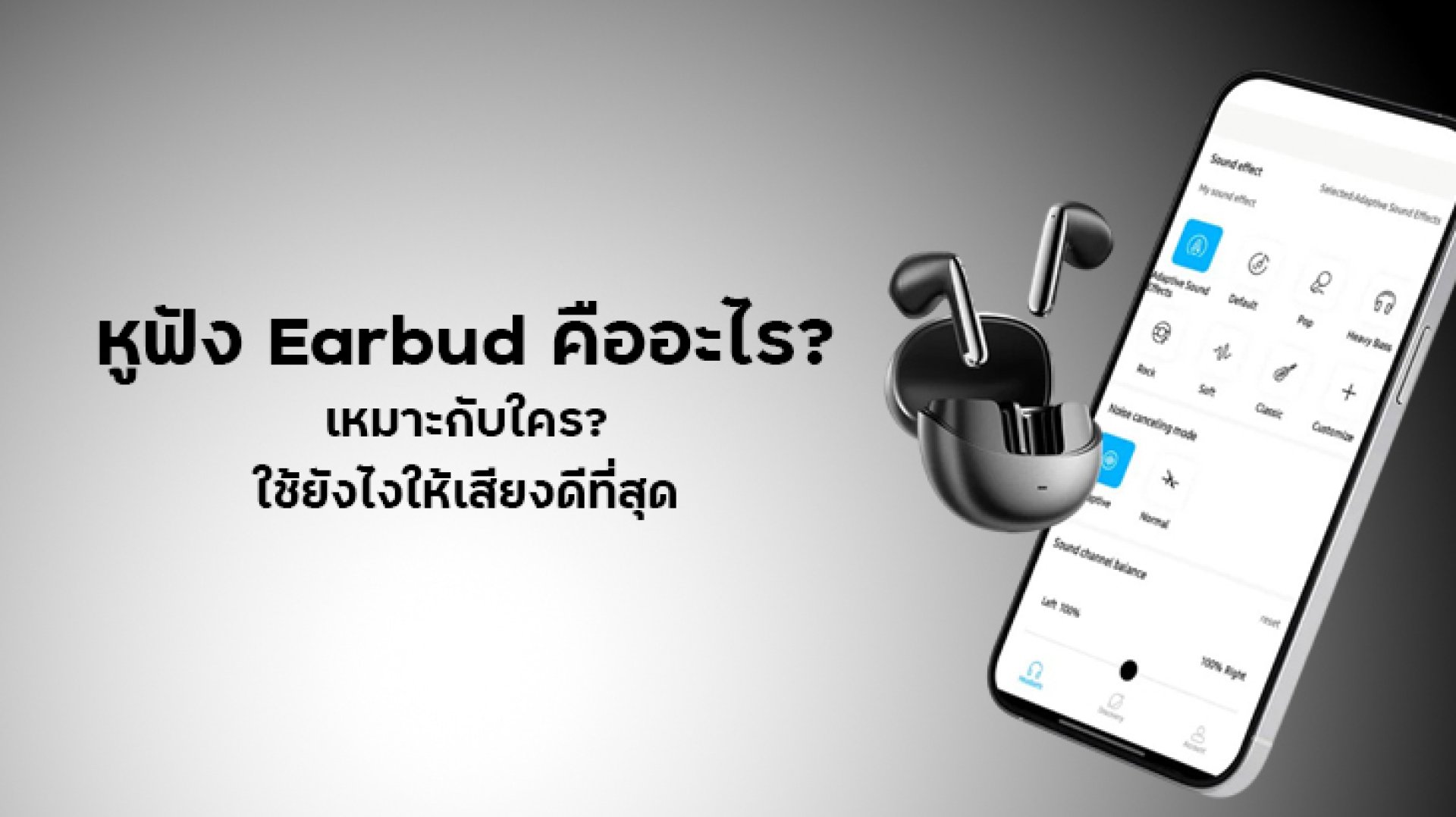
What are earbuds? In simple terms, earbuds are headphones designed to sit in or around the outer part of the ear without using silicone ear tips that seal inside the ear canal like traditional in-ear headphones.
This design gives earbuds a more open and lightweight wearing experience. Depending on the design, they can also allow you to hear more of your surroundings compared with headphones that create a strong seal inside the ear canal.
However, not all earbuds sound the same. The shape of the housing, driver design, acoustic tuning, and the way the earbuds fit your ears can all have a significant impact on the final sound.
In this guide, we'll explain what earbuds are, who they are best suited for, how to wear earbuds correctly, and how to get the best sound from earbuds. We'll also cover important things to consider before buying a pair.
What Are Earbuds?
Earbuds are headphones designed to sit around the outer part of the ear rather than using an ear tip that is inserted into the ear canal.
Because earbuds generally do not create the same type of seal as in-ear headphones, they can provide a more open listening experience. Depending on the design, users may also be able to hear more environmental sounds.
Earbuds are available in both wired and wireless versions. Today, True Wireless Stereo (TWS) earbuds are particularly popular because there is no cable connecting the two earbuds and they are easy to carry.
How Do Earbuds Work?
The basic principle behind earbuds is similar to other types of headphones. An audio signal from a smartphone, tablet, computer, or other device is sent to the earbuds, where the internal electronics process the signal before the driver converts it into sound waves.
What makes earbuds different is primarily the position of the driver and how the sound is delivered into the ear.
Unlike in-ear headphones, earbuds generally do not create a tight seal inside the ear canal. As a result, the distance between the driver and your ear, as well as the angle of the earbuds, can have a noticeable effect on the sound you hear.
What Are the Advantages of Earbuds?
1. Comfortable for People Who Dislike Ear Tips
One of the biggest advantages of earbuds is that they do not require silicone ear tips to sit inside the ear canal. Many people find this more comfortable, especially when listening to music or podcasts for extended periods.
2. A More Open Listening Experience
Because earbuds generally do not completely seal the ear canal, they can provide a more open and airy listening experience compared with headphones that strongly isolate the ears.
3. Better Awareness of Surrounding Sounds
The more open design can make it easier to hear environmental sounds. This can be useful when working in an office, walking around the house, or using headphones in public environments where awareness of your surroundings is important.
4. No Need to Choose Different Ear Tip Sizes
Traditional earbuds without silicone ear tips do not require you to choose between small, medium, or large ear tips. This can make them simpler to use for people who do not like experimenting with different ear tip sizes.
Who Are Earbuds Best For?
Earbuds can work well for many types of users, but they are particularly suitable for people who prioritize comfort, an open listening experience, and awareness of their surroundings.
- People who dislike silicone ear tips
- People who wear headphones for long periods while working
- People who frequently listen to podcasts or audiobooks
- People who want to remain aware of surrounding sounds
- People who mainly use headphones at home or in the office
- People who want a compact and portable pair of headphones
However, earbuds are not automatically the best choice for every situation. If you participate in activities involving a lot of movement, such as running or HIIT, you should pay close attention to the shape and stability of the earbuds because some designs may move or fall out more easily.
What Types of Music Are Good for Earbuds?
Earbuds can be used for virtually any genre of music. However, the listening experience depends heavily on the tuning and acoustic design of the specific model, so it is not accurate to assume that every pair of earbuds sounds the same.
For genres that benefit from an open and spacious presentation, such as acoustic, vocal, jazz, and live recordings, earbuds with good soundstage performance can provide an enjoyable listening experience.
They can also work well with bass-heavy genres such as electronic, hip-hop, and pop. However, bass depth and impact can vary considerably because earbuds generally do not create the same type of seal as in-ear headphones.
Why Do Some Earbuds Have Weak Bass?
One important reason is the lack of a tight seal inside the ear canal. With less isolation, some low-frequency energy can escape instead of being delivered directly into the ear.
The fit also matters. If the earbuds sit too far away from the optimal position, or their shape does not match your ears well, the bass response may become noticeably weaker.
Therefore, if your earbuds sound thin or lack bass, don't immediately assume that the headphones have poor sound quality. Try adjusting the position of the earbuds first. A small change in position can significantly affect the sound you hear.
How to Wear Earbuds for the Best Sound
1. Position the Earbuds Correctly
Don't simply put the earbuds in your ears and start playing music. Take a moment to adjust their position so that the drivers are positioned correctly relative to your ears.
2. Don't Push Them Too Deeply
Traditional earbuds are not designed to be inserted deeply into the ear canal like in-ear headphones. Trying to push them deeper does not necessarily improve sound quality and may make them uncomfortable.
3. Experiment With the Angle
Slightly rotating the earbuds can change the position of the drivers relative to your ears. In some cases, this can affect bass response, vocal clarity, and the overall presentation of the sound.
4. Keep Both Sides Positioned Similarly
If the left and right earbuds sit at significantly different positions, the sound may feel unbalanced or appear to shift toward one side.
How to Make Earbuds Sound Better
Adjust the EQ to Your Preference
If your earbuds support an Equalizer or EQ, you can adjust the sound to match your listening preferences. For example, you may slightly increase the bass if you want more low-end weight, or adjust the midrange if you want vocals to stand out more.
However, avoid boosting every frequency band at the same time. Excessive EQ adjustments can make the sound muddy and may introduce distortion.
Use an Appropriate Bluetooth Codec
For Bluetooth earbuds, sound quality can also be affected by the Bluetooth audio codec, such as SBC, AAC, aptX, or LDAC. However, both the earbuds and the source device need to support the same codec for it to be used.
A codec with a higher theoretical transmission bitrate does not automatically guarantee better sound. The final result also depends on the driver, acoustic tuning, Bluetooth connection, and quality of the original audio source.
Use High-Quality Audio Sources
If the original audio source has limited quality, upgrading to better earbuds may not produce as much improvement as expected.
If you want to get the most from your earbuds, start with a good-quality audio source and check the audio-quality settings of your preferred streaming service.
Should You Use ANC on Earbuds?
Some earbuds support ANC (Active Noise Cancellation), even though they do not completely seal the ear canal like many in-ear headphones.
ANC performance depends on the headphone's acoustic design and noise-cancellation system. You should not assume that open-style earbuds will provide the same level of noise isolation as sealed in-ear headphones.
ANC can be useful in offices, public transportation, or other environments where you want to reduce background noise. However, if you need to remain aware of your surroundings, consider using Transparency or Ambient Mode if the earbuds support it.
Why Do My Earbuds Keep Falling Out?
If your earbuds frequently fall out, it does not necessarily mean the earbuds are defective. The shape of everyone's ears is different, and some earbud designs simply fit certain ears better than others.
Try these adjustments:
- Change the position of the earbuds.
- Rotate the earbuds slightly to find a more secure position.
- Check whether the size and shape of the earbuds match your ears.
- Clean sweat and moisture from the earbuds.
- If you use them for exercise, consider a model with wing tips or ear hooks.
If the earbuds continue to fall out frequently, the shape of that particular model may simply not match your ears. In that case, another design may be a better option.
Can You Use Earbuds for Exercise?
Yes, earbuds can be used for exercise, but the right design depends on the type of activity.
For walking, brisk walking, stretching, or light workouts, earbuds can be comfortable and convenient.
For running, HIIT, or activities involving jumping and rapid movement, look for earbuds with a more secure fit. Alternatively, consider in-ear headphones with additional stabilizing features.
You should also check the IP rating if you expect the earbuds to be exposed to sweat or moisture. Water and dust resistance vary between models, so always check the manufacturer's specifications.
Are Earbuds Comfortable for All-Day Use?
This is one area where earbuds can perform particularly well. Since they do not use ear tips that sit inside the ear canal, many people find them more comfortable during long listening sessions.
However, comfort does not mean you should listen continuously at high volume all day. Extended exposure to loud sound can increase the risk of hearing damage, so keep the volume at a reasonable level and take regular listening breaks.
Earbuds vs In-Ear What's the Difference?
If you want a detailed comparison, see our guide on Earbuds vs In-Ear: What's the Difference?, which covers the differences between the two designs in terms of comfort, sound, isolation, fit, and everyday use.
For a quick overview:
| Feature | Earbuds | In-Ear |
|---|---|---|
| Wearing style | Sits around the outer ear | Uses an ear tip inside the ear canal |
| Open feeling | Generally more open | More sealed |
| Environmental awareness | Generally higher | Depends on the seal and listening mode |
| Fit | Depends heavily on ear shape and earbud design | Usually secure when the correct ear tip is used |
| Comfort | Good for people who dislike ear tips | Depends on ear tip size and material |
| Noise isolation | Depends on the design | Provides passive isolation through the seal |
How to Choose Earbuds Before Buying
1. Consider the Shape and Size
Don't choose earbuds based only on their appearance. A stylish design may not necessarily fit your ears comfortably.
2. Look at the Driver Design
The driver has a major influence on sound, but driver size or the number of drivers alone cannot determine overall sound quality.
3. Check the Supported Bluetooth Codecs
If you're buying Bluetooth earbuds, check which codecs are supported by both the earbuds and your smartphone or other source device.
4. Check the Battery Life
For TWS earbuds, look at both the listening time of the earbuds themselves and the additional battery capacity provided by the charging case.
5. Check the IP Rating for Outdoor Use
If you plan to use your earbuds during workouts or outdoors, check the IP rating before buying to make sure the level of water and dust resistance matches your intended use.
6. Try Them On If Possible
Fit is something that specifications alone cannot fully describe. If you have the opportunity to try a pair before buying, take advantage of it.
Are Earbuds Right for You?
If you want headphones that are comfortable, lightweight, relatively open, and do not have silicone tips inside your ear canal, earbuds can be an excellent choice.
However, if your priorities are strong bass, high passive noise isolation, or maximum stability during high-movement activities, in-ear headphones may be more suitable.
There is no single headphone design that is perfect for everyone. The most important factors are your ear shape, listening habits, environment, and personal sound preferences.
Conclusion What Are Earbuds and Who Are They For?
Earbuds are headphones designed to sit around the outer part of the ear without using an ear tip inserted into the ear canal. Their main advantages include a comfortable fit, an open listening experience, and greater awareness of surrounding sounds in many situations.
They are well suited to people who want headphones for working, listening to music, podcasts, commuting, or everyday use without the feeling of having an in-ear tip inside the ear canal.
Getting the best sound from earbuds is not simply about adjusting the EQ. Start by positioning the earbuds correctly, choosing a model that fits your ears, using a good-quality audio source, and selecting an appropriate Bluetooth codec when available.
In short: The best earbuds are not simply the ones with the best specifications. They are the ones that fit your ears comfortably, sound good to you, and work well with your everyday lifestyle.
FAQ Earbuds
What are earbuds?
Earbuds are headphones designed to sit around the outer part of the ear rather than using silicone ear tips inserted into the ear canal like traditional in-ear headphones.
Who are earbuds best for?
Earbuds are suitable for people who prioritize comfort, an open listening experience, dislike silicone ear tips, and want greater awareness of surrounding sounds.
Do earbuds sound good?
Yes. Earbuds can deliver excellent sound quality, but performance depends on the driver, acoustic design, tuning, and how well the earbuds fit your ears.
Why do earbuds have weak bass?
Because earbuds generally do not create a tight seal inside the ear canal, some low-frequency energy can escape. The position of the earbuds in your ears can also significantly affect bass response.
Are earbuds more comfortable than in-ear headphones?
For many people, yes. Earbuds do not use ear tips inside the ear canal, which can make them more comfortable for extended listening. However, comfort ultimately depends on your ear shape and the specific design.
Can you use earbuds for workouts?
Yes. Earbuds can work well for walking and light exercise. For running, HIIT, or high-impact activities, choose a model with a secure fit and check its IP rating if it will be exposed to sweat or moisture.