Black vs. Green Air Purifier Filters: What's the Difference and Which Should You Choose?
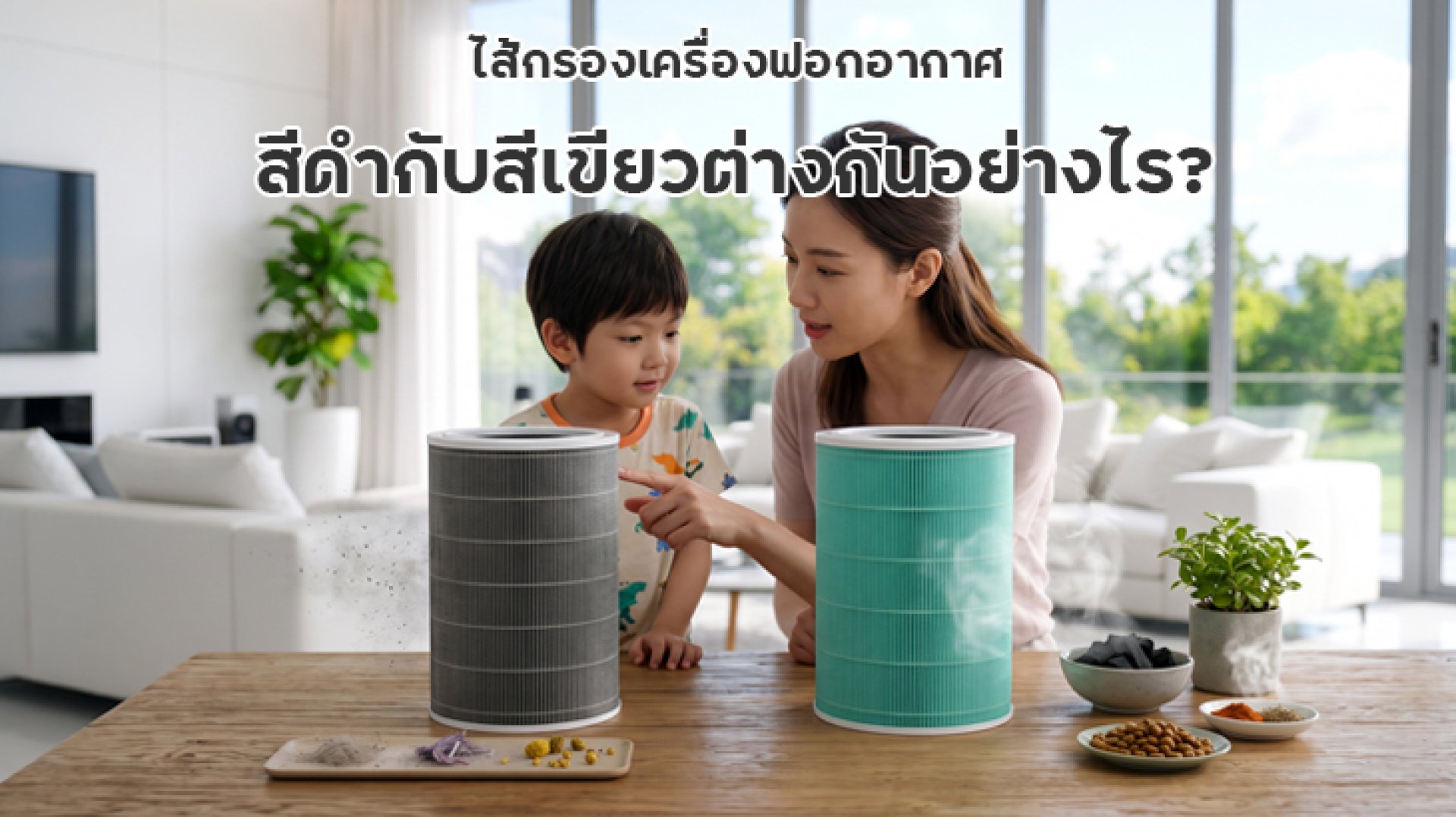
When shopping for an air purifier filter, you may notice that some filters are black while others are green, even when they look similar in size and design. Which one is better at capturing PM2.5? And if you want to reduce cooking odors, musty smells, or pet odors, which color should you choose?
The answer is that filter color alone does not determine filtration performance. There is no universal standard requiring all black or green filters to use specific materials. Some black filters may contain activated carbon to help adsorb odors, while some green filters may use different filtration materials or specialized coatings. Their actual performance depends on the manufacturer's design and specifications.
This guide explains the differences in filtration materials, how to choose a filter based on your indoor air quality concerns, and what to check before buying a replacement. The goal is to help you select a filter that suits your needs without paying extra for features you may not need.
What Is the Difference Between Black and Green Air Purifier Filters?
| Feature | Black Filter | Green Filter |
|---|---|---|
| Possible materials | May contain activated carbon or dark-colored filtration materials | May use green-colored filtration materials or specialized coatings |
| PM2.5 filtration | Depends on the performance of its particle-filtration layer | Depends on the performance of its particle-filtration layer |
| Odor reduction | Can help adsorb certain odors if it contains an appropriate amount of activated carbon | Depends on whether it contains odor-adsorbing materials |
| Air pollutant control | Depends on the materials and verified performance data | Depends on the materials and verified performance data |
| Important consideration | Black color does not guarantee activated carbon or superior odor reduction | Green color does not guarantee antibacterial properties or better filtration |
The bottom line: To compare two filters, examine their materials, filtration layers, and performance specifications rather than relying on their external color.
1. Black Air Purifier Filters: What Are They Best For?
Some black air purifier filters contain activated carbon, also known as activated charcoal. This material has a highly porous structure that can adsorb certain airborne molecules, including some compounds responsible for unpleasant odors.
However, not every black filter contains activated carbon. Some may simply use dark-colored filtration materials, so you should check the product specifications before assuming that a black filter is designed for odor control.
Potential Benefits of Activated Carbon Filters
- Cooking odor reduction: Can help reduce certain cooking odors when the carbon material is suitable for the compounds involved.
- Musty odor control: May help manage some unpleasant indoor smells.
- Adsorption of certain airborne gases: Performance depends on the type and amount of carbon, as well as the contact time between the air and the material.
Keep in mind that activated carbon does not function in the same way as a particle filter. If PM2.5 is your main concern, check whether the filter also has an effective particle-filtration layer.
2. Green Air Purifier Filters: How Are They Different?
A green filter may be designed for a particular air purifier model or made with specialized filtration materials or coatings. However, its color alone cannot tell you whether it performs better than a black filter.
For example, if a manufacturer claims that a green filter has an antimicrobial coating, check the type of coating, its intended function, the conditions under which it works, and any relevant test results. Green color does not automatically mean that a filter can protect against bacteria or viruses.
What Should You Check Before Choosing a Green Filter?
- Filtration materials: Determine whether it uses particle filtration, odor-adsorbing materials, or a combination of layers.
- Filtration efficiency: Look for clear performance data and information about the testing method.
- Additional features: If the manufacturer claims odor reduction or antimicrobial properties, check for supporting evidence.
- Compatibility: Confirm that the filter is designed for your specific air purifier model.
A green filter can be a suitable choice for homes concerned about dust, provided its particle-filtration performance meets your needs. The key is to evaluate its actual specifications rather than its color.
3. Which Filter Should You Choose for PM2.5?
If fine particulate matter is your main concern, prioritize the filter's particle-filtration efficiency instead of its color. Consider a HEPA filter or another filter with clearly documented performance for capturing small airborne particles.
Before purchasing, check the following:
- Does the manufacturer specify particle-filtration efficiency and the conditions under which it was tested?
- Is the filter designed for your particular air purifier model?
- Does the air purifier have a clean air delivery rate (CADR) suitable for the size of your room?
- Can the filter be installed and sealed properly to prevent air from bypassing the filtration material?
Even a highly efficient filter may not deliver the expected results if the air purifier is too small for the room or air leaks around the filter allow unfiltered air to pass through.
4. Which Filter Is Better for Cooking Odors, Musty Smells, and Pet Odors?
If odors are your main concern rather than dust, look for a filter containing activated carbon or another material designed to adsorb the relevant gases and odor-causing compounds. Check the manufacturer's specifications to determine whether the filter is suitable for your needs.
| Indoor Air Concern | What to Look For |
|---|---|
| PM2.5 pollution | Documented filtration efficiency for fine particles |
| Cooking odors | Activated carbon or another material suitable for adsorbing odor-causing compounds |
| Pet odors | Suitable odor-control materials, combined with regular cleaning of odor sources |
| Musty smells | A filter designed to reduce certain odors, along with moisture and source control |
| Both dust and odors | A multi-layer filter with particle filtration and odor-adsorbing materials |
Remember that activated carbon cannot remove every type of odor or pollutant. It also cannot replace proper ventilation or the removal of odor sources, such as food waste, leftover food, or excess moisture.
5. How to Choose the Right Air Purifier Filter and Avoid Buying the Wrong One
Check the Model Number First
Filters that look similar may have different dimensions, locking mechanisms, or sealing designs. Check your air purifier's model number and the manufacturer's recommended replacement filter before purchasing. Do not choose a replacement based only on color or approximate size.
Read the Filtration Material Specifications
If you want to reduce dust, check the filter's particle-filtration performance. If odor reduction is your priority, confirm whether it contains activated carbon or another odor-adsorbing material. For additional features, look for relevant test results and supporting product documentation.
Check the Recommended Replacement Interval
Filter lifespan depends on operating hours, the amount of dust and pollution in the surrounding environment, and the manufacturer's recommendations. Do not rely on changes in color alone to determine whether a filter needs replacing, because different materials age and deteriorate in different ways.
Consider the Long-Term Cost
Compare replacement filter prices, product availability, and the recommended replacement interval. A filter with a lower upfront price does not necessarily have a lower long-term operating cost.
Conclusion: Should You Choose a Black or Green Air Purifier Filter?
Black and green air purifier filters may differ in their materials and functions, but their colors alone cannot tell you which one captures PM2.5 more effectively or reduces odors better.
- For PM2.5: Prioritize particle-filtration efficiency and compatibility with your air purifier.
- For odor reduction: Look for activated carbon or another material specifically designed to adsorb odors.
- For specialized features: Verify the materials and look for supporting performance data.
- For replacement filters: Check the model number and compatibility before purchasing.
Ultimately, the best air purifier filter is not necessarily black or green. It is the one that addresses your indoor air quality concerns, has verifiable performance specifications, and fits your air purifier correctly.
Frequently Asked Questions (FAQ)
Do black filters capture PM2.5 better than green filters?
Not necessarily. Color does not directly determine PM2.5 filtration performance. Compare the filtration materials, particle-capture efficiency, and available test data for each filter model.
Do all black air purifier filters contain activated carbon?
No. A black appearance may result from different materials or design choices. Check the product specifications to confirm whether the filter actually contains activated carbon.
Can green filters kill germs?
You cannot determine this from color alone. If a manufacturer claims that a filter can inhibit microorganisms, review the materials used, operating conditions, and relevant test results.
Can I replace a black filter with a green one?
Only if the manufacturer confirms that the replacement is compatible with your air purifier model or reliable product documentation establishes compatibility. Do not substitute filters simply because they look similar or have comparable dimensions.
Can an activated carbon filter also capture dust?
It depends on the filter's construction. A filter that includes an appropriate particle-filtration layer may capture dust as well. However, activated carbon primarily adsorbs certain gases and odor-causing compounds; it is not a substitute for an effective particle filter.
References
- U.S. EPA: Air Cleaners and Air Filters in the Home Guidance on choosing air cleaners and understanding particle filtration.
- U.S. EPA: Ozone Generators that are Sold as Air Cleaners Information about safety considerations for certain air-cleaning technologies.
- Association of Home Appliance Manufacturers (AHAM) Information about air purifier performance evaluation and clean air delivery rate (CADR).