What Does Activated Carbon Do in an Air Purifier Filter? Is It Good for Homes with Odors?
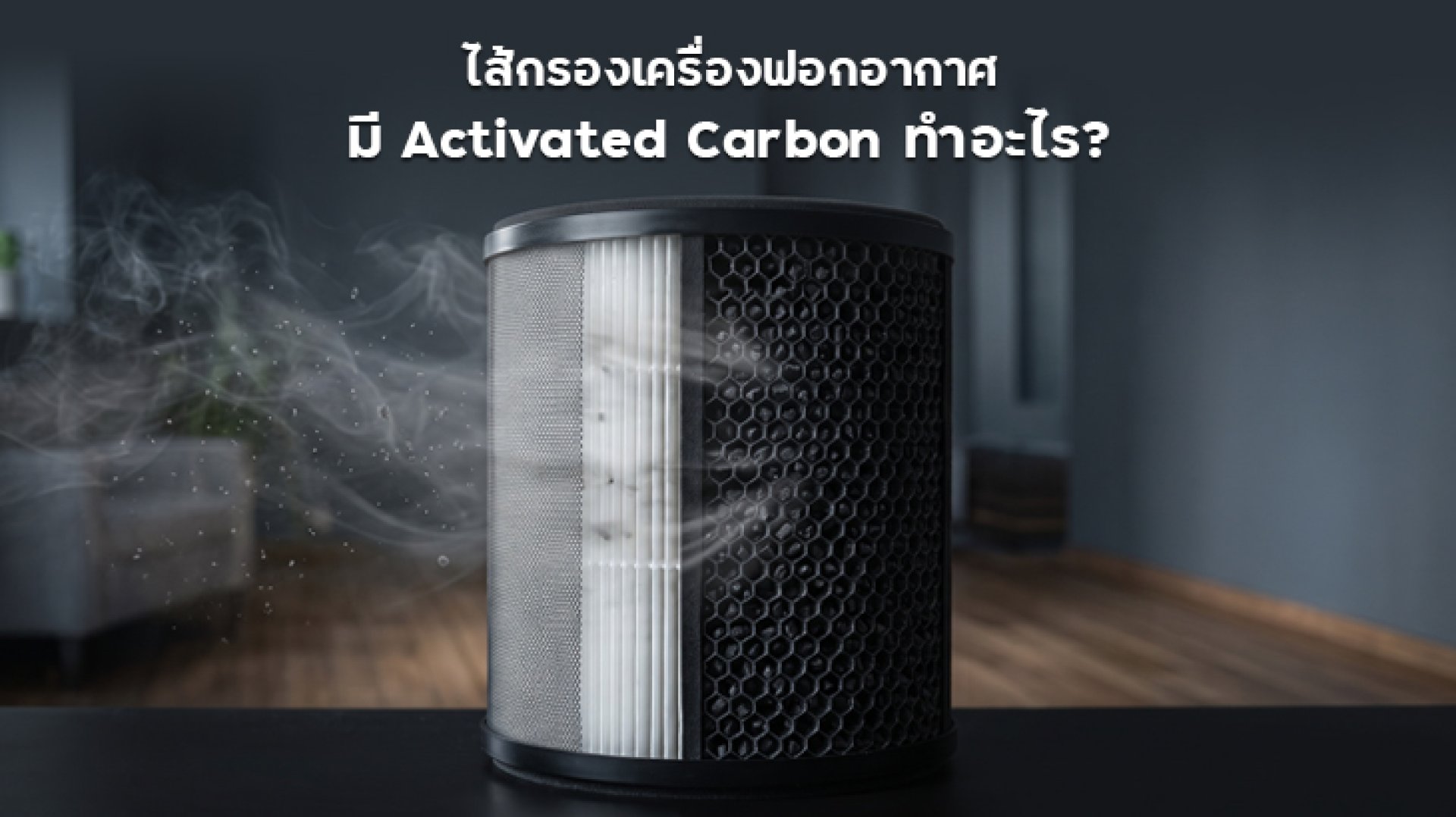
When choosing an air purifier filter, you may have noticed the term Activated Carbon or activated charcoal listed in the specifications. But what does it actually do?
Activated Carbon has a different job from a HEPA filter. While HEPA filters are designed primarily to capture airborne particles, Activated Carbon is used to adsorb certain gases, odors, and volatile organic compounds (VOCs).
That makes an air purifier filter with Activated Carbon particularly interesting for homes affected by cooking odors, smoke, chemical smells, or other gaseous pollutants. However, Activated Carbon does not remove every type of odor, so understanding how it works is important before choosing a filter.
What Is Activated Carbon in an Air Purifier Filter?
Activated Carbon is a carbon-based material processed to create a highly porous structure with a large internal surface area. These pores allow certain gas and vapor molecules to attach to the carbon surface.
This process is called adsorption. It is different from absorption, where a substance is taken into the interior of another material.
The U.S. Environmental Protection Agency (EPA) identifies Activated Carbon as a common adsorbent used in portable air cleaners and HVAC systems to remove gaseous contaminants.
What Does Activated Carbon Do in an Air Purifier Filter?
Different parts of an air purifier filter can perform different jobs. A typical multi-stage filter may work roughly like this:
| Filter Component | Main Function |
|---|---|
| Pre-filter | Captures larger particles such as hair, dust, and debris |
| HEPA filter | Captures fine airborne particles such as particulate matter |
| Activated Carbon | Adsorbs certain gases, odors, and VOCs |
In other words, Activated Carbon does not replace a HEPA filter. Instead, it adds gas-phase filtration capability to a filtration system that primarily targets particles.
The EPA recommends choosing an air cleaner with an Activated Carbon filter or another gas-removal filter when the goal is to reduce gaseous pollutants.
Can Activated Carbon Really Reduce Odors?
Yes, in some cases. Activated Carbon can adsorb certain gaseous compounds responsible for odors.
However, this does not mean that an Activated Carbon filter will eliminate every smell in your home. Different odors come from different chemical compounds, and Activated Carbon does not have the same effectiveness against every gas.
The EPA explains that gas-phase filters are designed to target certain gaseous pollutants and that no residential gas-phase filter should be expected to remove all gaseous pollutants found in a typical home.
What Types of Household Odors Can Activated Carbon Help With?
| Odor Source | Can Activated Carbon Help? | Important Note |
|---|---|---|
| Cooking odors | Yes, in some cases | Can adsorb certain odor-causing gases |
| Smoke odors | Yes, in some cases | Can help with certain gaseous compounds |
| Cleaning product odors | Potentially | Depends on the chemicals released |
| Paint and new-material odors | Potentially | Some VOCs can be adsorbed by Activated Carbon |
| Musty odors | May help with some odors | The underlying moisture or mold problem must still be addressed |
| PM2.5 | Not its primary function | A particle filter such as HEPA is more appropriate |
Activated Carbon vs HEPA Filter: What Is the Difference?
This is one of the most important things to understand when choosing an air purifier filter. HEPA and Activated Carbon may be included in the same filter cartridge, but they perform different functions.
| Feature | HEPA Filter | Activated Carbon |
|---|---|---|
| Captures particles | Yes | Not its primary function |
| Targets fine particles | Yes | Not its primary function |
| Helps with odors | Not its primary function | Yes, for certain gaseous compounds |
| Targets gases | Not its primary function | Yes |
| Helps with some VOCs | Not its primary function | Yes |
| Basic principle | Particle filtration | Adsorption |
The EPA explains that most filters are designed primarily for either particles or gases. Some air cleaners therefore use separate filtration stages to address both.
Does More Activated Carbon Mean Better Odor Removal?
The amount of Activated Carbon matters. Simply seeing the words Activated Carbon on an air purifier filter does not tell you how effective the filter will be against odors or gases.
The EPA specifically notes that Activated Carbon filters can be effective when a large amount of carbon material is used. For VOC removal, the EPA also notes that a thicker layer of adsorbent material can be more effective.
When comparing an air purifier filter, therefore, look beyond the words Activated Carbon. If the manufacturer provides information about the amount, thickness, or construction of the carbon layer, that information can be useful.
Why Does Activated Carbon Become Less Effective Over Time?
Activated Carbon has a limited adsorption capacity. As the available adsorption sites become occupied by contaminants, the material becomes less effective at capturing additional gases.
This process is commonly described as saturation.
EPA technical guidance explains that adsorbent materials have limited capacities and require maintenance. The effectiveness can also vary depending on the type and concentration of the gas being removed.
This is why an air purifier filter containing Activated Carbon still needs to be replaced according to the manufacturer's recommended maintenance schedule.
What Kind of Air Purifier Filter Is Best for a Home with Odors?
If odors are the main concern, look for an air purifier filter that includes Activated Carbon or another gas-phase filtration material.
A simple way to choose is:
- Main concern: PM2.5 and dust Prioritize an effective particle filter such as HEPA.
- Main concern: odors Look for Activated Carbon or another gas-phase filter.
- Concerned about both dust and odors Look for a filter system that combines particle filtration and Activated Carbon.
- Strong odor from a continuous source Identify and remove the source instead of relying only on filtration.
Can Activated Carbon Remove Every Type of Odor?
No. This is an important point to understand before buying an Activated Carbon filter.
Its performance depends on factors such as the type of gas, concentration, amount of carbon, airflow, temperature, and humidity.
EPA technical information notes that Activated Carbon can remove many gaseous contaminants, but its effectiveness varies considerably between different gases. It is also less effective against some compounds, including certain low-molecular-weight aldehydes such as formaldehyde.
Therefore, it would be inaccurate to claim that an Activated Carbon filter can remove all odors.
Should You Rely on an Air Purifier Filter Alone to Remove Odors?
No.
An Activated Carbon filter can help reduce certain gaseous pollutants and odors, but it cannot replace source control.
For example, if an odor comes from food waste, moisture, mold, smoke, or a chemical product that continues to release gases, the underlying source should be addressed first.
The EPA recommends reducing or removing pollution sources and improving ventilation as the most effective ways to improve indoor air quality. Filtration can be used as a supplement.
How to Choose an Air Purifier Filter with Activated Carbon
1. Check What the Carbon Is Designed to Remove
Activated Carbon does not work equally well against every gas. If the manufacturer provides information about the target pollutants or VOCs, use that information when comparing filters.
2. Look at the Amount of Carbon
A very thin carbon layer may have limited adsorption capacity. When gas and odor removal is important, a filter containing a larger amount of carbon can be more useful.
3. Check the Complete Filter System
If your home has both dust and odor problems, do not choose a filter based on Activated Carbon alone. Consider the combination of particle filtration and gas-phase filtration.
4. Check Replacement Recommendations
Activated Carbon becomes less effective as its adsorption capacity is used up. Follow the manufacturer's recommended replacement schedule rather than waiting until the filter simply looks dirty.
Activated Carbon in an Air Purifier Filter: Final Verdict
Activated Carbon is mainly used to adsorb certain gases, VOCs, and odor-causing compounds. This makes it a useful component for an air purifier filter intended to address household odors and gaseous pollutants.
However, Activated Carbon is not a replacement for a HEPA filter. HEPA is primarily designed to capture airborne particles, while Activated Carbon targets certain gases through adsorption.
If your home has both dust and odor problems, an air purifier filter that combines effective particle filtration with Activated Carbon can be a practical choice.
Just remember: more carbon generally gives the filter more adsorption capacity, but has Activated Carbon alone does not guarantee strong odor removal. Filter design, carbon quantity, target gases, airflow, and replacement frequency all matter.
Frequently Asked Questions
What does Activated Carbon do in an air purifier filter?
Activated Carbon adsorbs certain gases and gaseous pollutants, including some VOCs and odor-causing compounds. It is primarily used for gas-phase filtration rather than particle filtration.
Does Activated Carbon remove PM2.5?
Activated Carbon is not primarily designed to capture PM2.5. A particle filter such as HEPA is designed to capture airborne particles, while Activated Carbon is used mainly for gases and certain odors.
Is an air purifier filter with Activated Carbon good for homes with odors?
Yes, it can help with certain odors caused by gaseous compounds. However, it will not remove every type of odor, and the source of persistent odors should also be addressed.
Does Activated Carbon need to be replaced?
Yes. Activated Carbon has a limited adsorption capacity. As it becomes saturated, its ability to adsorb additional gases decreases. Follow the manufacturer's recommended replacement schedule.
Is more Activated Carbon always better?
A larger amount of Activated Carbon can provide greater adsorption capacity, but performance also depends on the type of carbon, target gas, concentration, airflow, humidity, and filter design.
References
- U.S. EPA Guide to Air Cleaners in the Home
- U.S. EPA Air Cleaners and Air Filters in the Home
- U.S. EPA Residential Air Cleaners: A Technical Summary
- U.S. EPA Will Air Cleaners Reduce Health Risks?