Bagged vs Bagless Vacuum Cleaners Whats the Difference?
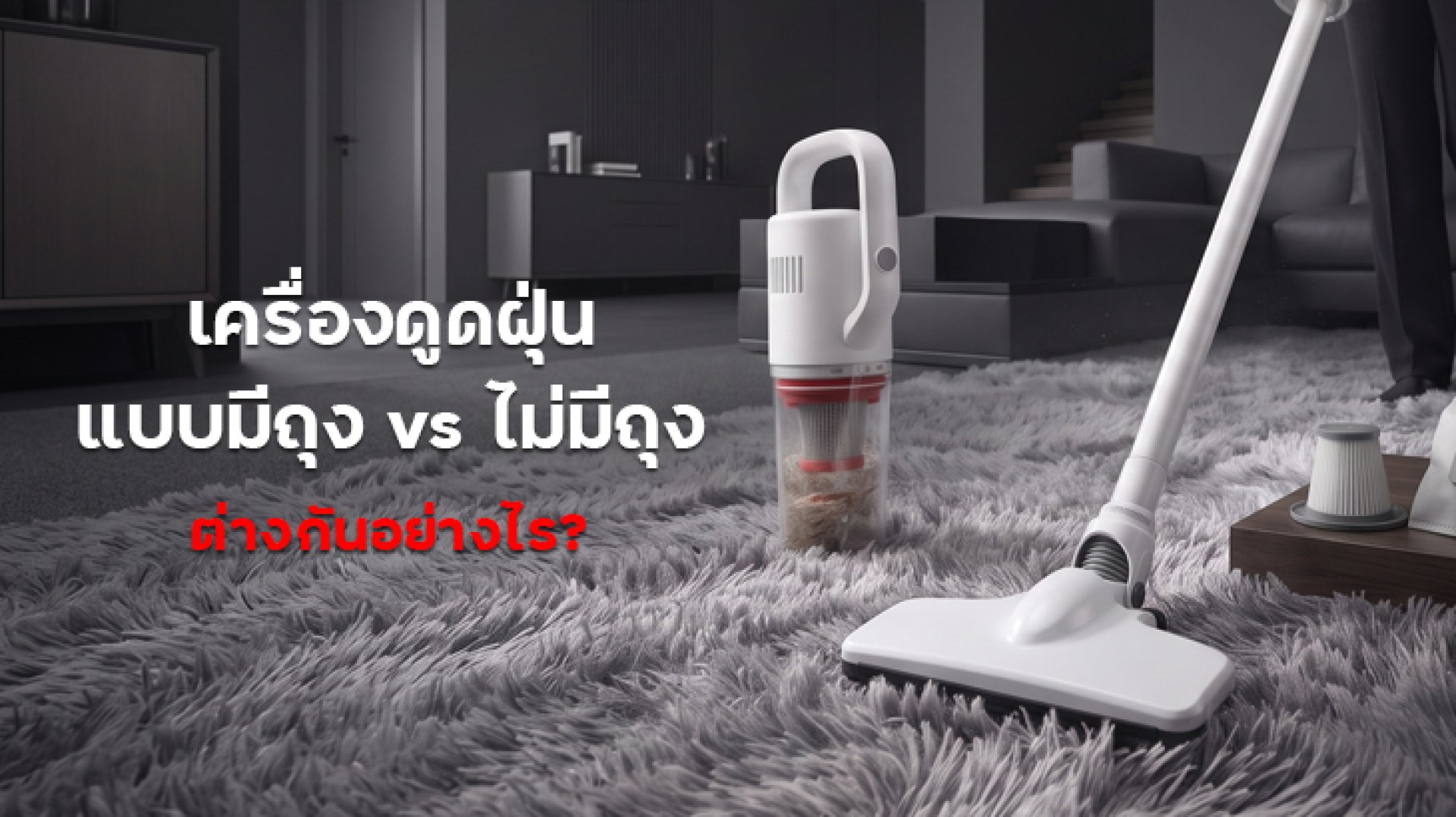
When choosing a vacuum cleaner, many people focus on suction power, motor performance, or included accessories. But there is another important factor that affects everyday use: how the vacuum stores the dust and debris it collects.
A bagged vacuum cleaner stores dust and debris inside a replaceable vacuum bag, while a bagless vacuum cleaner uses a built-in dust bin or canister that you empty when it becomes full.
Neither type is automatically better for every home. The right choice depends on how often you vacuum, how much dust your home produces, how much maintenance you are comfortable with, and whether minimizing direct contact with dust is important to you.
In this guide, we compare bagged vs bagless vacuum cleaners in terms of dust storage, maintenance, running costs, filtration, convenience, and everyday use.
What Is a Bagged Vacuum Cleaner?
A bagged vacuum cleaner uses a disposable bag to collect dust, dirt, hair, and other debris sucked up by the machine. When the bag becomes full, you remove it and replace it with a new one.
The vacuum bag is not simply a storage container. Depending on the vacuum's design, it can also play an important role in the filtration system. For this reason, using the correct replacement bag for your vacuum model is important.
Advantages of Bagged Vacuum Cleaners
- Dust and debris are contained inside the bag.
- Many bags can hold a relatively large amount of debris.
- The bag can usually be removed and discarded without directly handling the collected dust.
- They can be a good choice for people who want to minimize exposure to dust when emptying the vacuum.
- Some bags have self-sealing designs that help contain dust during disposal.
Consumer Reports notes that bagged vacuums generally hold more debris and need to be emptied less frequently. They also tend to be less messy to empty than bagless models.
Disadvantages of Bagged Vacuum Cleaners
- You need to purchase replacement bags.
- There is an ongoing cost for replacement bags.
- The bag must eventually be replaced when it becomes full.
- Some models make it difficult to see how full the bag is unless they have a full-bag indicator.
- You need to make sure replacement bags are compatible with your specific vacuum model.
What Is a Bagless Vacuum Cleaner?
A bagless vacuum cleaner does not use disposable dust bags. Instead, it collects dirt and debris inside a built-in dust bin or canister.
When the bin becomes full, you remove it from the vacuum and empty its contents into a trash bin. One of the most obvious advantages is that you do not need to purchase replacement vacuum bags.
Advantages of Bagless Vacuum Cleaners
- No replacement vacuum bags are required.
- You can usually see how much dust has accumulated inside the bin.
- You can empty the bin and continue using the vacuum without purchasing a new bag.
- There are fewer disposable consumables to buy.
- You do not need to worry about finding the correct replacement bag.
However, bagless does not mean maintenance-free. The dust bin and filters still need to be cleaned or maintained according to the manufacturer's instructions. Consumer Reports also notes that bagless models may require more frequent filter cleaning or replacement.
Disadvantages of Bagless Vacuum Cleaners
- The dust bin needs to be emptied regularly.
- Emptying the bin can release some of the collected dust back into the air.
- Filters may require regular cleaning or replacement.
- A full or poorly maintained dust bin can affect the vacuum's performance.
- Dust, hair, and debris may accumulate inside the bin and other components over time.
Bagged vs Bagless Vacuum Cleaners: Whats the Difference?
| Feature | Bagged | Bagless |
|---|---|---|
| Dust storage | Disposable vacuum bag | Built-in dust bin or canister |
| Emptying | Remove and discard the bag | Remove and empty the dust bin |
| Dust exposure | Generally lower during disposal | More direct exposure when emptying the bin |
| Replacement bags | Required | Not required |
| Capacity | Often relatively large | Depends on the size of the dust bin |
| Visibility of dust | Usually limited | Usually easy to see |
| Filter maintenance | Depends on the vacuum design | Regular filter maintenance may be required |
| Dust disposal | Usually cleaner and more convenient | Requires emptying the collected debris |
Which Type Is Better at Collecting Dust?
It is not accurate to say that bagged vacuums always collect dust better simply because they use bags. Actual cleaning performance depends on the vacuum's suction system, airflow, filtration, seals, brush design, and overall engineering.
Consumer Reports evaluates vacuum cleaners using multiple tests, including cleaning performance, suction, filtration effectiveness, and emissions. This means the type of dust container is only one part of the overall performance equation.
If dust containment is important to you, look beyond suction power. Consider the filtration system, filter quality, airflow, sealing, and maintenance requirements as well.
Which Is Better for People with Dust Allergies?
If someone in your home is sensitive to dust or allergens, a bagged vacuum can have an advantage when it comes to emptying the collected debris.
Instead of opening a dust bin and pouring the collected debris into a trash can, you can simply remove the bag and dispose of it. This can reduce direct exposure to the dust inside the vacuum.
Consumer Reports notes that people with allergies may prefer bagged models with self-sealing bags because they can reduce exposure to allergens during disposal. A vacuum with an effective HEPA filtration system can also help reduce airborne particle emissions.
That does not mean every bagless vacuum is unsuitable for homes concerned about dust. A well-designed bagless vacuum with effective filtration can still perform well. The important point is to consider the entire filtration and dust-containment system.
What to Look for When Choosing a Bagless Vacuum Cleaner
1. Check the Filtration System
Do not focus only on suction power. Check what type of filter the vacuum uses and whether it has multiple stages of filtration.
If minimizing fine-particle emissions is important, a vacuum with an effective filtration system can be a better choice. Consumer Reports notes that HEPA filters have been effective at reducing particle emissions in its tests.
2. Check How the Dust Bin Is Emptied
A dust bin that is easy to remove does not necessarily mean it will be easy to empty cleanly. Look at how the bin opens and whether dust can easily fall directly into the trash without excessive handling.
3. Check the Dust Bin Capacity
If you vacuum a large home regularly, a small dust bin may require frequent emptying. A larger capacity can make regular cleaning more convenient.
4. Check Filter Replacement Costs
Although a bagless vacuum does not require replacement bags, it may still require replacement filters. Check the price and availability of replacement filters before buying.
What to Look for When Choosing a Bagged Vacuum Cleaner
- Check whether replacement bags are easy to find.
- Compare the price of replacement bags.
- Check the capacity of the vacuum bag.
- Look for a full-bag indicator if available.
- Check the vacuum's filtration system.
- Consider bags with self-sealing or dust-containment features.
- Make sure replacement bags are compatible with the exact vacuum model.
Bagged vs Bagless: Which One Should You Choose?
| Your Priority | Better Option to Consider |
|---|---|
| You want less direct contact with dust when emptying the vacuum | Bagged |
| You do not want to buy replacement bags | Bagless |
| You want to see how much dust has accumulated | Bagless |
| You vacuum frequently and want a larger dust capacity | Bagged |
| Someone in the home is sensitive to dust | Bagged with effective filtration |
| You want to avoid disposable vacuum bags | Bagless |
Bagged vs Bagless Vacuum Cleaner: Final Verdict
Bagged vacuum cleaners are a good choice if you prioritize convenient and cleaner dust disposal, want to minimize direct contact with collected debris, and prefer a larger dust capacity between emptying sessions. The trade-off is the ongoing cost of replacement bags.
Bagless vacuum cleaners are better suited to people who do not want to purchase replacement bags and prefer to see the amount of dust collected inside the vacuum. However, you will need to empty the dust bin and maintain the filters regularly.
In simple terms: choose bagged if you want cleaner and easier dust disposal, while choose bagless if you want to avoid replacement bags.
But when it comes to actual cleaning performance, do not judge a vacuum based on the bagged or bagless design alone. Suction, airflow, filtration, sealing, brush design, and maintenance all matter.
Frequently Asked Questions
Is a bagged vacuum cleaner better than a bagless vacuum?
Neither type is better in every situation. Bagged vacuums are generally more convenient for dust disposal, while bagless models eliminate the need to purchase replacement bags.
Do bagless vacuum cleaners need their filters replaced?
They may. Filter maintenance depends on the specific model, but filters generally need to be cleaned or replaced according to the manufacturer's instructions.
Are bagged vacuum cleaners better for people with dust allergies?
A bagged vacuum can be advantageous because the collected dust can be removed without directly emptying a dust bin. An effective filtration system, such as a properly designed HEPA system, is also important.
Are bagless vacuum cleaners cheaper to maintain?
They can reduce the cost of disposable bags, but they may still require filter cleaning and replacement. Consider the total maintenance cost over the life of the vacuum rather than looking only at the price of replacement bags.
Does suction power decrease when a vacuum bag or dust bin becomes full?
Performance can be affected when a bag or dust bin becomes too full or when filters become clogged. Follow the manufacturer's instructions for emptying, cleaning, and replacing filters.
References
- Consumer Reports: Should You Get a Bagged or Bagless Vacuum?
- Consumer Reports: How to Choose the Right Vacuum for the Job
- Consumer Reports: Choose the Right Vacuum for Your Home
- Consumer Reports: Best Canister Vacuums of 2026