Why Does a HEPA Filter Clog So Quickly? 7 Causes of Fast Filter Clogging
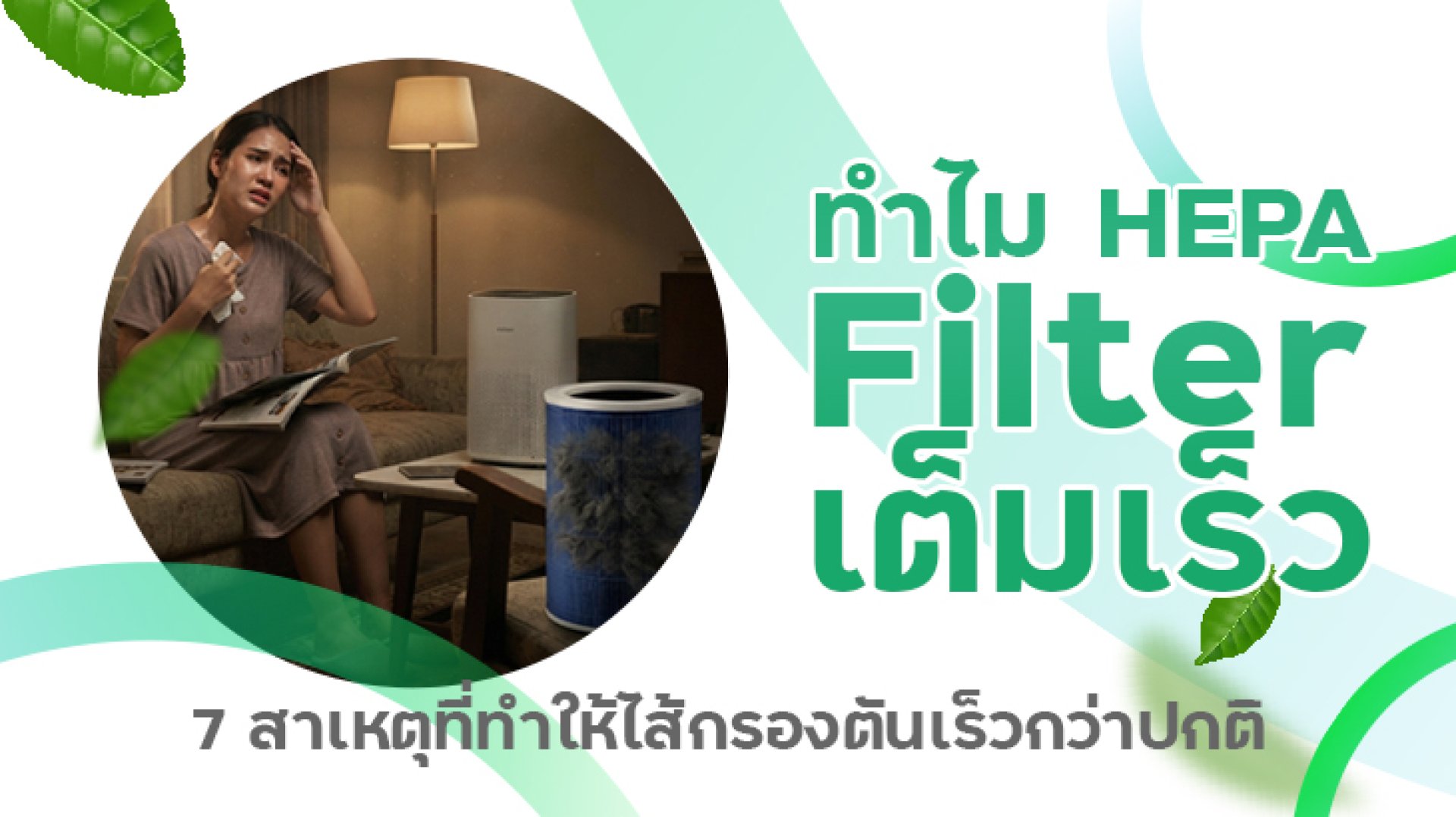
Is your HEPA filter clogging quickly even though you recently replaced it? This is a common question, especially for people who use air purifiers during periods of high PM2.5 levels or run their air purifier for long hours every day.
A filter that becomes dirty quickly does not necessarily mean that the HEPA filter is poor quality. It may simply be collecting a large amount of particles from the air passing through the purifier. The more particles in the air, the longer the operating time, or the higher the fan speed, the faster the filter may accumulate dust.
In this article, iSUPER explains 7 reasons why a HEPA filter can clog faster than expected, along with practical ways to reduce the workload on your HEPA filter without replacing it unnecessarily early.
Why Does a HEPA Filter Clog or Get Dirty So Quickly?
First, it is important to understand that a HEPA filter is a mechanical air filter that uses a dense network of fine fibers to capture airborne particles. As air passes through the filter, particles are captured and gradually accumulate on the filter media.
As more particles accumulate, resistance to airflow can increase. This is commonly referred to as pressure drop, and it is an important factor when evaluating filter loading and the condition of an air filtration system.
According to ASHRAE, the accumulation of contaminants on a filter can increase resistance to airflow. The rate of accumulation depends on factors such as the type and concentration of particles as well as how the system operates.
7 Reasons Why Your HEPA Filter Clogs Faster Than Normal
1. The Air in Your Area Contains High Levels of Dust
One of the most common reasons is simply the amount of airborne particles in the surrounding environment.
If your home is located near a busy road, construction site, industrial area, or another dusty environment, your air purifier may need to filter significantly more particles than a purifier operating in a cleaner environment. As a result, the filter can accumulate dust more quickly.
This can be particularly noticeable during periods of high PM2.5 levels. Your air purifier may need to operate continuously to help reduce airborne particles indoors, so the filter may become dirty faster than it does when outdoor air quality is better.
2. The Pre-filter Is Not Cleaned Regularly
The pre-filter is the first filtration stage in many air purifiers. It helps capture larger particles such as dust, hair, pet fur, and other debris before air reaches the finer filtration layers.
If the pre-filter becomes heavily loaded with dust, it can increase resistance within the airflow path and affect the air circulation of the purifier.
This is why maintaining the pre-filter is important. Keeping it clean can help reduce the workload placed on the subsequent filtration stages. Always check and clean the pre-filter according to the manufacturer's instructions for your specific air purifier.
A simple rule to remember: If you want your HEPA filter to last longer, do not focus only on the HEPA filter. Take care of the pre-filter as well.
3. The Air Purifier Runs for Long Periods or 24 Hours a Day
Running an air purifier for longer periods means more air passes through the filter.
The U.S. EPA explains that increasing fan speed and operating time increases the amount of air that passes through an air cleaner. At the same time, if the air contains a high concentration of particles, the filter can become dirty more quickly.
Therefore, a household that runs an air purifier continuously may need to replace its filter at a different interval compared with a household that only runs the purifier at night or during specific periods.
4. You Use the Air Purifier in a Home With Pets
Homes with dogs or cats can contain pet hair, skin flakes, and dust carried on fur and other surfaces. These particles can increase the workload of the air purifier's filtration system.
If you have pets and notice that your HEPA filter is clogging quickly, check the pre-filter first. Larger particles such as pet hair and dust should generally be captured by the first filtration stage.
Regularly vacuuming floors and cleaning areas where pets spend time can also help reduce the amount of dust that becomes airborne again.
5. The Air Purifier Is Used During Construction or Home Renovation
Home renovations, drilling, sanding, cutting wood, and other construction activities can generate significantly more airborne particles than normal household activities.
If you operate an air purifier continuously in such an environment, the HEPA filter may collect particles very quickly and become loaded sooner than expected.
ASHRAE notes that HEPA and ULPA filters can benefit from pre-filtration to protect high-efficiency filters from excessive particle loading.
Therefore, when renovating a home, controlling dust at its source is important. An air purifier should not be expected to handle all construction dust by itself.
6. The Air Purifier Is Too Small for the Room
Another factor that is often overlooked is whether the air purifier is properly sized for the room.
If an air purifier has insufficient CADR for the space, it may need to operate continuously or at higher fan speeds to circulate and clean the air effectively.
The U.S. EPA recommends choosing an air cleaner with an appropriate CADR for the size of the room. A higher CADR generally allows an air cleaner to process more air and is better suited to larger spaces.
Therefore, before concluding that your HEPA filter is poor quality, check whether the air purifier itself is appropriately sized for the room.
7. The Air Purifier Is Frequently Used at High Fan Speed
Fan speed directly affects how much air passes through the filter.
When the fan operates at a higher speed, more air passes through the filter over the same period. This can increase the amount of air being cleaned, but if the room contains a high concentration of airborne particles, more particles can also reach the filtration system.
The U.S. EPA notes that using higher fan speeds can increase air cleaning performance, while operating time, fan speed, and pollutant levels can all influence how quickly a filter becomes dirty.
How Can You Tell If a HEPA Filter Is Clogged?
You should not determine whether a HEPA filter is clogged or ready for replacement based only on its color. Different filters use different materials and construction methods.
Instead, check for several signs:
- The filter has accumulated a significant amount of dust.
- The air purifier indicates that the filter should be replaced.
- Airflow from the purifier appears weaker than normal.
- The purifier seems to work harder or the fan sound changes noticeably.
- The filter has reached the replacement interval recommended by the manufacturer.
In professional air filtration systems, pressure drop can be used to help evaluate filter loading. For residential air purifiers, however, users should primarily follow the manufacturer's maintenance instructions and the filter replacement indicator provided by the appliance.
Does a HEPA Filter That Gets Dirty Quickly Mean It Is Low Quality?
Not necessarily.
A filter that collects dust quickly may simply be dealing with a high particle load in the surrounding environment. This can happen particularly in areas with high levels of airborne pollution.
Instead of focusing only on how quickly the filter becomes dirty, consider whether the purifier is operating as designed, whether the filter is being maintained correctly, and whether the filter is the correct replacement for the specific purifier model.
ASHRAE explains that filter selection involves more than filtration efficiency. Factors such as airflow resistance, service life, and maintenance requirements should also be considered.
How to Prevent Your HEPA Filter From Clogging Too Quickly
1. Maintain the Pre-filter First
The pre-filter helps capture larger particles before they reach the finer filtration stages, making it one of the most important parts of the air purifier to check and maintain regularly.
2. Keep the Area Around the Air Purifier Clean
Do not place the air purifier in an area where large amounts of dust accumulate. Regularly vacuum floors, carpets, curtains, and areas around the purifier to reduce the amount of dust that can become airborne again.
3. Do Not Force an Old Filter to Keep Running
Extending filter life does not mean using the filter until it becomes completely clogged. If the manufacturer recommends replacing the filter or the air purifier displays a replacement warning, replace the filter according to the manufacturer's instructions.
4. Check the Room Size and CADR
If the purifier is too small for the room, it may need to operate harder and for longer periods. Choosing an air purifier that is appropriate for the room size can therefore affect both cleaning performance and filter usage.
5. Do Not Wash a HEPA Filter Unless the Manufacturer Says It Is Washable
Different HEPA filters use different materials and construction methods. Washing should therefore not be considered a standard maintenance method for every HEPA filter.
If you are wondering Can a HEPA filter be washed with water?, check the manual or maintenance instructions provided by the manufacturer of your specific model before cleaning it.
Want Your Filter to Last Longer? Maintain the Entire Filtration System
Making a HEPA filter last longer is not simply about trying to clean the HEPA filter itself. It is better to reduce the amount of dust entering the purifier, maintain the pre-filter, and clean the air purifier according to the manufacturer's instructions.
If you want a more detailed guide to maintaining each filtration layer, check out our article: How to Extend the Life of Your Air Purifier Filter. It explains how to maintain the pre-filter, activated carbon filter, and HEPA filter.
How to Extend the Life of Your Air Purifier Filter
Conclusion: Does a HEPA Filter That Gets Dirty Quickly Need to Be Replaced Immediately?
A HEPA filter that becomes dirty quickly does not necessarily indicate that the filter has a problem. The rate at which particles accumulate depends on several factors, including the amount of dust in the environment, operating hours, fan speed, room size, pets, and pre-filter maintenance.
If your HEPA filter clogs quickly, start by checking the pre-filter, surrounding environment, operating hours, and whether the air purifier is appropriately sized for the room. Then check the manufacturer's recommended filter replacement schedule.
The simple rule is: Reduce the amount of dust reaching the HEPA filter, and you reduce the workload on the HEPA filter. Do not try to extend filter life beyond the manufacturer's recommendations, because an excessively loaded filter can affect airflow and overall system performance.
FAQ: HEPA Filter Clogging Quickly
Why does my HEPA filter clog so quickly?
Common causes include high levels of airborne dust, long operating hours, high fan speeds, pets, construction or renovation activities, and insufficient pre-filter maintenance.
What happens when a HEPA filter becomes clogged?
As particles accumulate, resistance to airflow can increase. This can make it harder for air to pass through the filter, so the filter should be inspected and replaced according to the manufacturer's recommendations.
How long does a HEPA filter last?
There is no single replacement interval that applies to every air purifier. Filter life depends on the model, air quality, particle concentration, operating hours, and fan speed. Always follow the manufacturer's recommendations and the air purifier's filter indicator.
Does a HEPA filter getting dirty quickly mean the air purifier is working well?
Not necessarily. A dirty filter indicates that particles have accumulated on the filter, but filter appearance alone cannot determine overall air-cleaning performance. Consider the purifier's specifications, operating conditions, and the manufacturer's guidance.
Should I clean or replace my HEPA filter?
It depends on the manufacturer's instructions. If the manufacturer does not state that the HEPA filter is washable or water-cleanable, do not wash it yourself. Replace the filter according to the recommended schedule or the purifier's filter replacement indicator.